
Should Costing & Product Cost Analysis
A should cost model builds the expected product cost from the manufacturing process itself — every element calculated, documented and open to discussion with suppliers and engineering.
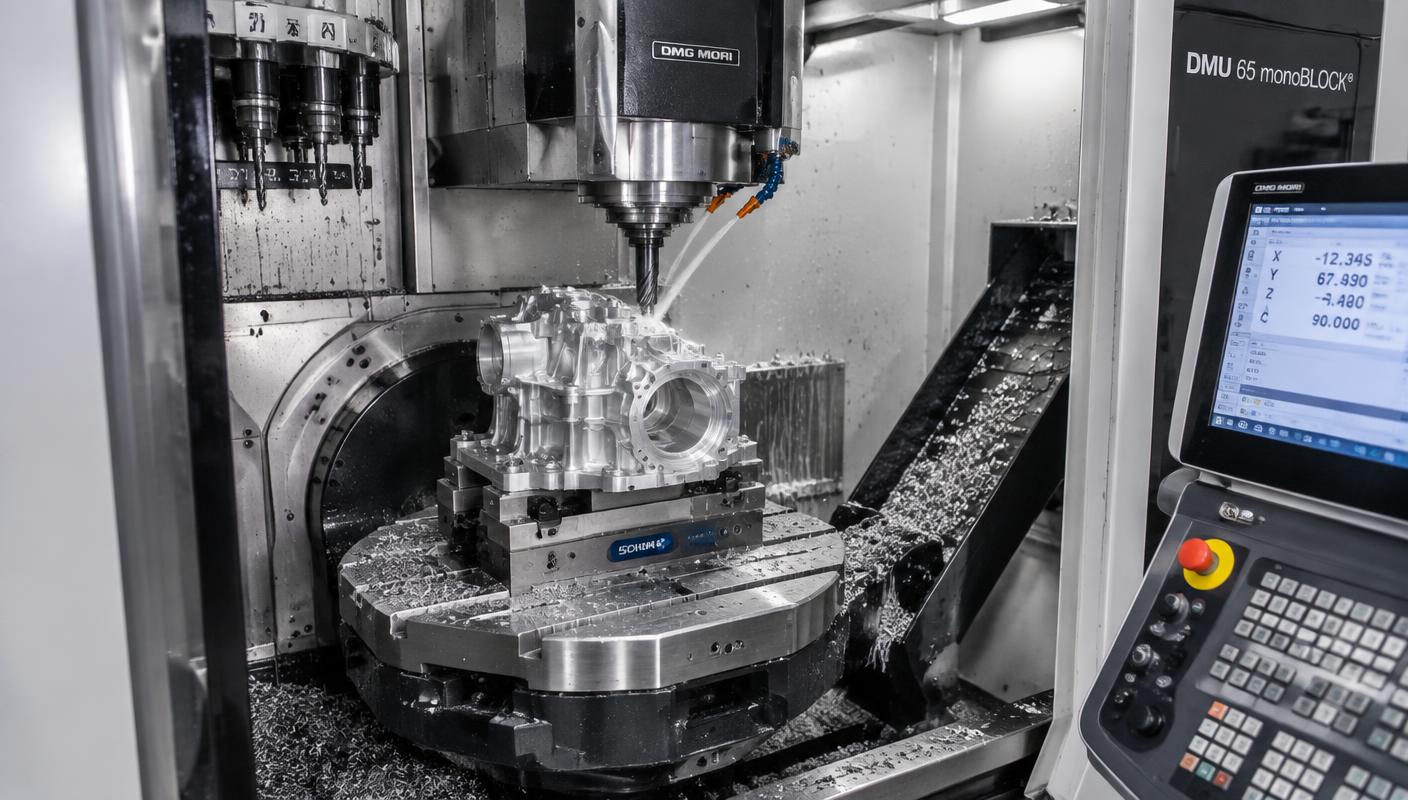
Should costing answers one question precisely: what should this part cost when it is produced with a defined process, in a defined location, at a defined volume?
- Raw materials
- Manufacturing processes
- Machine rates
- Labor
- Cycle time
- Scrap
- Energy
- Tooling
- Overheads
- Logistics
- Supplier margin
Should Cost Model
Each cost element is derived from process parameters rather than assumed as a percentage: material mass and yield, process route and cycle time, machine hourly rate, labor content, scrap, energy, tooling amortization, overhead structure, logistics and margin.
Manufacturing Cost Calculation
Calculation follows the real process chain — including setup, secondary operations, handling and inspection — so the result can be compared line by line with a supplier breakdown.
Beyond desktop calculation
Where appropriate, assumptions are verified against real production environments. Observed cycle times, utilisation, staffing and scrap replace estimated values, and the model is corrected accordingly.
Should Cost → True Cost → Lean Cost
Three distinct stages, kept distinct throughout our work.
- Should Cost — the analytical cost model
- True Cost — the baseline validated with actual production and supplier data
- Lean Cost — the optimization potential derived from the validated manufacturing reality
Supplier Cost Breakdown
The model is used to structure supplier discussions around process facts: which operations, rates and allowances are plausible, and where a quotation deviates from the manufacturing logic.
Cost Benchmarking
Comparison is made between process routes, plant locations and manufacturing concepts — per part and per process, without generalized percentage claims.
Bring us the part and the quotation.
We build the should cost model, compare it with the supplier breakdown and identify where the difference comes from.